Tenya Weight by Depth Calculator
Estimate madai tenya weight from depth, tide, drift, braid PE, bait drag, line angle, and bottom-contact margin in grams, go, and ounces.
Calculation breakdown
Shallow finesse
Inshore standard
Tidal channel
Deep offshore
| Tenya size | Weight grams | Weight ounces | Typical calm depth | Typical moderate depth |
|---|---|---|---|---|
| 3 go | 11.3 g | 0.40 oz | 20-35 ft / 6-11 m | 15-25 ft / 5-8 m |
| 5 go | 18.8 g | 0.66 oz | 35-55 ft / 11-17 m | 25-40 ft / 8-12 m |
| 8 go | 30.0 g | 1.06 oz | 55-80 ft / 17-24 m | 40-60 ft / 12-18 m |
| 10 go | 37.5 g | 1.32 oz | 70-100 ft / 21-30 m | 55-75 ft / 17-23 m |
| 12 go | 45.0 g | 1.59 oz | 85-115 ft / 26-35 m | 65-90 ft / 20-27 m |
| 15 go | 56.3 g | 1.98 oz | 105-140 ft / 32-43 m | 80-110 ft / 24-34 m |
| 20 go | 75.0 g | 2.65 oz | 135-180 ft / 41-55 m | 105-145 ft / 32-44 m |
| 25 go | 93.8 g | 3.31 oz | 170-225 ft / 52-69 m | 130-175 ft / 40-53 m |
| 30 go | 112.5 g | 3.97 oz | 205-270 ft / 62-82 m | 155-210 ft / 47-64 m |
| 40 go | 150.0 g | 5.29 oz | 270-350 ft / 82-107 m | 210-280 ft / 64-85 m |
| Factor | Low setting | Medium setting | High setting | Calculator effect |
|---|---|---|---|---|
| Braid diameter | PE 0.6, about 0.128 mm | PE 0.8-1.0, about 0.148-0.165 mm | PE 1.5+, about 0.205 mm or more | More line drag raises weight and line out. |
| Current | 0.2-0.5 kt | 0.6-1.1 kt | 1.2 kt and above | Current is squared softly because drag grows quickly. |
| Bait profile | Small prawn or slim strip | Medium prawn | Double bait, skirt, bulky trailer | Bait drag changes drop time and bottom feel. |
| Line angle | 15-25 degrees | 26-38 degrees | 39-55 degrees | Sharper vertical goals require heavier heads. |
| Bottom hold | Light sand touch | Tap and lift | Hard reef read | Higher hold margin rounds up the tenya size. |
Lift-fall search
0.9-1.1xUse the calculated head and var the bait fall naturally with brief bottom checks.
Dragging bottom
1.1-1.25xChoose the next heavier size when you must keep steady contact across sand or shell.
Snaggy reef
0.9-1.0xKeep contact readable but avoid parking an oversized head in cracks.
Deep reset
1.15x+Round up when fast bottom return is more important than finesse fall speed.
| Target | Common tenya range | Line profile | Bottom priority | Weight note |
|---|---|---|---|---|
| Madai / red sea bream | 5-20 go | PE 0.6-1.0 | Standard tap and lift | Use the lightest head that keeps touch. |
| Snapper on reef edge | 8-25 go | PE 0.8-1.2 | Firm mixed ground | Round up for surge and ledge faces. |
| Rockfish and grouper | 12-30 go | PE 1.0-1.5 | Hard reef read | Use heavier head for quick bottom checks. |
| Flatfish over sand | 5-18 go | PE 0.6-1.0 | Dragging bottom | Steady line angle matters more than fall flutter. |
| Kayak inshore mixed bag | 4-15 go | PE 0.6-0.8 | Snag-aware contact | Manage drift speed before adding too much weight. |
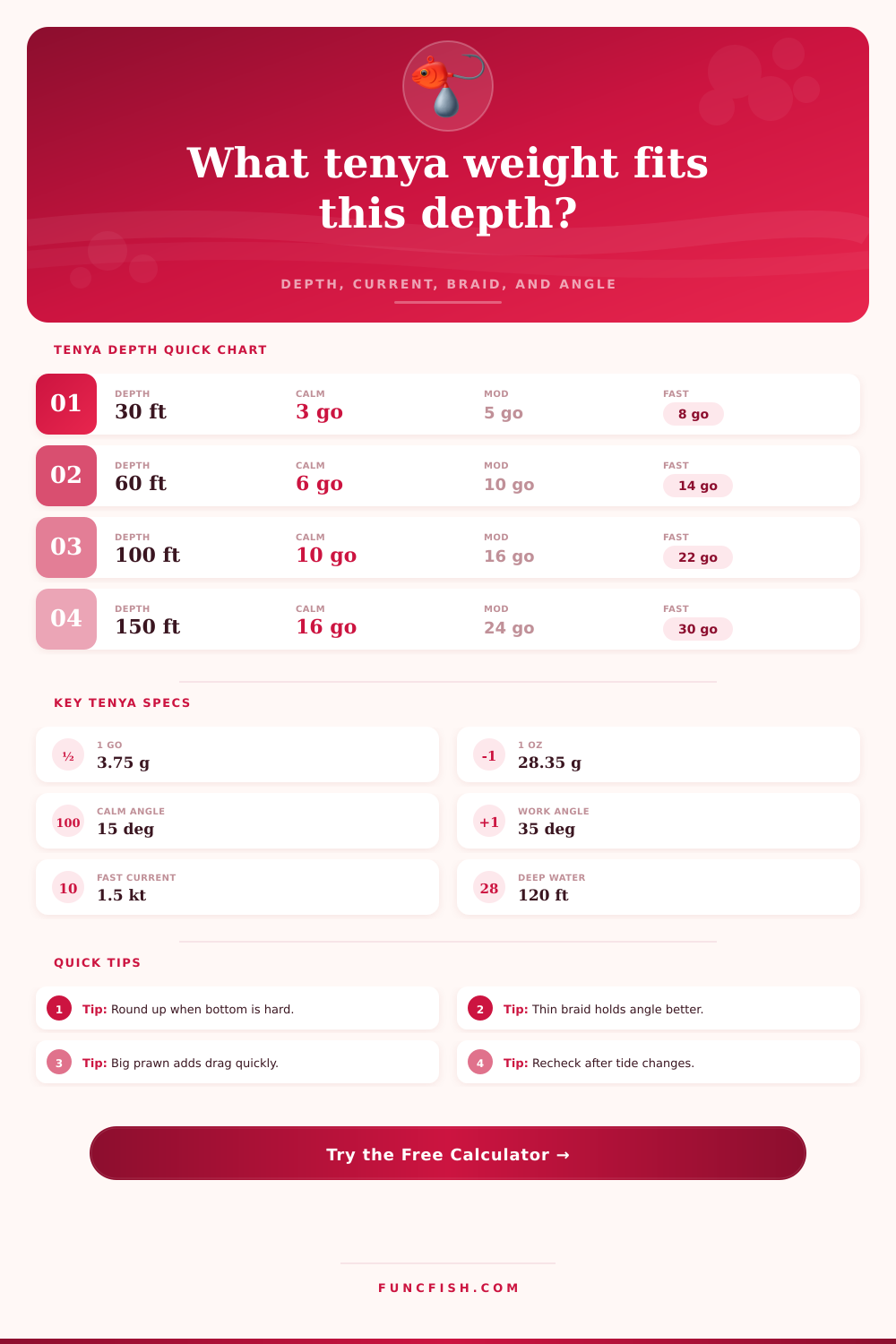
Tenya sizes use the common Japanese go reference where 1 go is approximately 3.75 grams.
Angle first: If your line lays too far behind the boat, the bait loses clean bottom contact. Either slow the drift, reduce braid drag, or step up one tenya size.
Bottom read: Hard reef often needs a heavier, quicker-tapping head, but snaggy cracks may fish better with the calculated lower size and shorter pauses.
When you think a fish has bit and you start reeling in and your line goes limp… Chances are good that wasn’t a fish; it was probably gravity. If your bait isn’t weighted properly for the depth of the water and the current, it will float off the edge of the reef. When that happens, you aren’t going to catch many fish because you can’t stay on bottom long enough to make contact with them.
Get enough weight down there to hold your bait tight on the bottom next to the fishes. You don’t have to guess at this. The calculator saves you from guessing, but knowing how it all works make you a better angler.
How to Choose the Right Weight for Fishing
When most of us choose a head size, we go with what has worked for us in the past. But the truth is you need something different depending off the water conditions. For instance, a heavier head might feel right when you hold it in your hands, but because a thicker braid like PE 2.0 acts like a sail and pulls your bait away from bottom, you use a thinner braid to help keep things vertical. On a strong tide, this can help finesse fishing work well too because it won’t create more drag and will keep your line more vertical.
How fast it falls depends upon the bait and that’s something I see a lot of guys never thinking about till they lose a fish. A big plastic skirted shrimp doesn’t fall like a little prawn. That plastic skirt is going to have water resistance, it will push the line out horizontally in the current and slow its descent. Use a bulky rig versus a slim strip bait in one knot of current and you’ll want to adjust weight up to keep bottom contact. But not too much.
That’s where the profile comes into play. Because the weight falling on the bottom has as much to do with it falling than what is on the end of the hook. The bigger its profile the more resistance you create. So add a bigger weight or slow your drift down.
Weight varies by depth and it’s not direct. In shallow water, less line is in the water to catch the current, so almost any lure flies right. Beyond one-hundred-feet, though, line angle makes all the difference. High rod tip with a fast drift creates a long bow in your line trailing behind boat. Sensitivity suffers as biting fish pull on a length of slack water until it reaches your fingertips.
As table shows, head range for each setup increase from shallow to deep offshore probes. Deeper fishing adds more drag as every foot of line from your reel seat to the bottom pulls against you, even more than just gravity. This is where it’s truly valuable. The output spits out a suggested weight range for you.
Now based off the situation, you may opt for the lighter end of the scale if you’re fishing around rocky bottoms as this will prevent snagging and keep the rig moving. On the other hand, if you’re dragging over sand looking for flatfish, you’ll likely go with the heavier side to maintain consistent contact. Because each day is different, there isn’t a right or wrong way to weight tenya. Just play with your inputs until they match your bottom type, line, and tide based off what you see on your depth finder.
Before you even make a cast over a good looking ledge think about what the current is doing to your braid. Think about the drag of your bait rig and how much vertical line you will have to pull in to get a naturaly look. You should of thought about the drag before casting.
The closer you can make that bottom feel like you could reach out and touch it, the better the weight. That tactile contact separates a good day from a frustrating day of fishing by allowing the head to do its work. Then all you have to worry about is feeling the bite instead of struggling with the drifting gear.