Weighted Steel Line Depth Calculator
Estimate trolling depth, line out to target, speed-adjusted sink rate, and blowback for weighted steel line using payout, lure drag, current, and rod angle.
🎯Weighted Steel Presets
⚙Line, Speed, and Rig Inputs
Weighted Steel Depth Estimate
Calculation Breakdown
📊Weighted Steel Equipment Grid
30 lb Steel
45 lb Steel
60 lb Steel
45 lb Copper
The grid uses common trolling reference values. Exact depth changes with line age, knots, current, boat turns, lure drag, and board tow angle.
📏Line Type Sink Reference
| Line type | Base sink at reference speed | Reference speed | Diameter note | Best depth band |
|---|---|---|---|---|
| 18 lb micro weighted steel | 17 ft per 100 ft out | 2.4 mph | thin, board friendly | 15 to 60 ft |
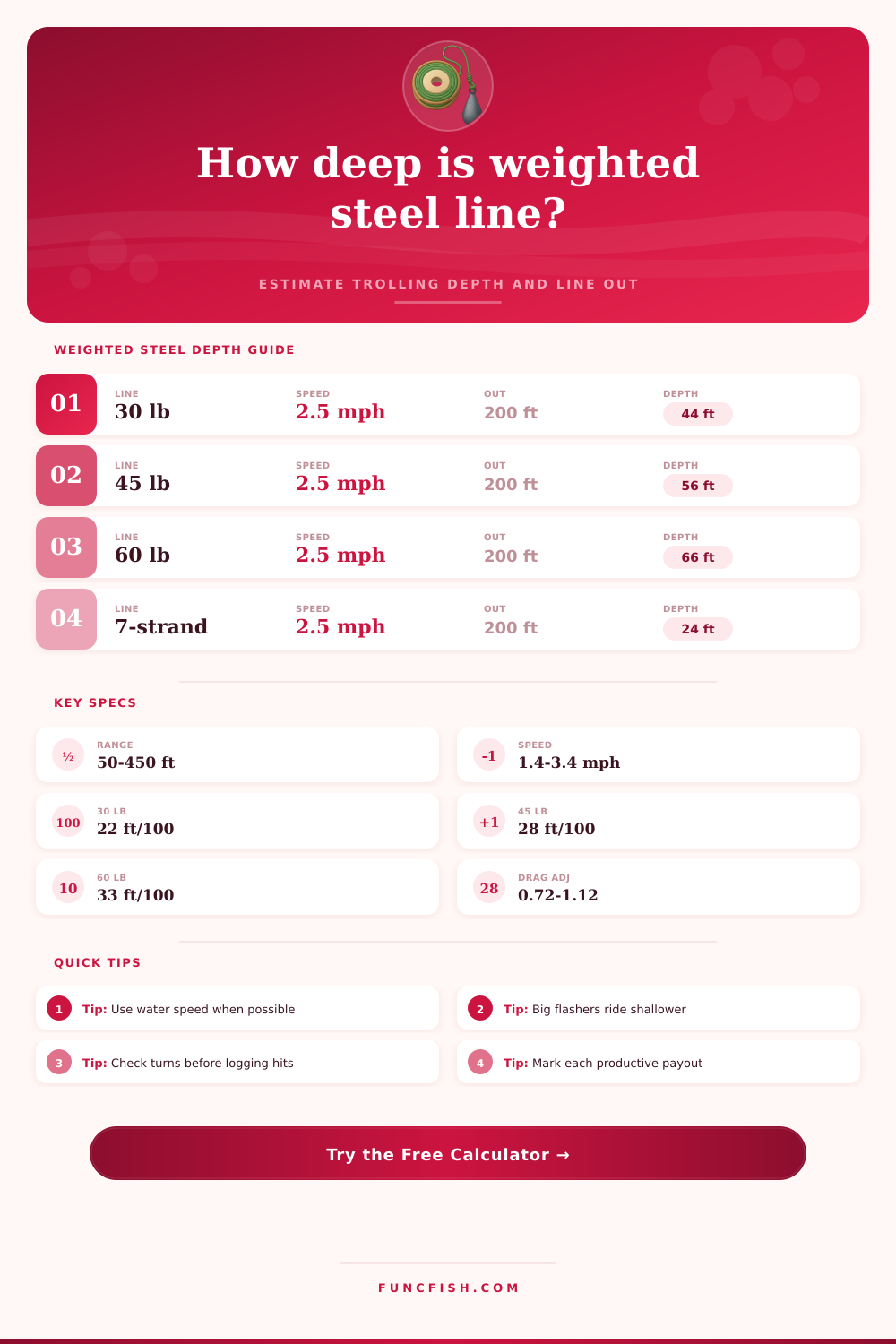
| 30 lb weighted steel | 22 ft per 100 ft out | 2.5 mph | general salmon spread | 25 to 85 ft |
| 45 lb weighted steel | 28 ft per 100 ft out | 2.5 mph | stronger, steeper pull | 35 to 105 ft |
| 60 lb heavy weighted steel | 33 ft per 100 ft out | 2.3 mph | deep program line | 45 to 135 ft |
| 75 lb mag weighted steel | 37 ft per 100 ft out | 2.2 mph | heavy diver-style pull | 55 to 160 ft |
| 7-strand stainless trolling wire | 12 ft per 100 ft out | 2.5 mph | not weighted; low sink | 10 to 55 ft |
| Leadcore reference | 20 ft per 100 ft out | 2.0 mph | speed sensitive | 15 to 80 ft |
| 45 lb copper reference | 32 ft per 100 ft out | 2.5 mph | dense comparison line | 40 to 130 ft |
🐠Species and Presentation Grid
King Salmon
40-110 ft30 to 60 lb weighted steel with spoons, plugs, or flasher rigs. Heavy attractors usually need extra payout for the same target depth.
Coho Salmon
20-70 ft18 to 45 lb steel works well on boards. Small spoons and flies track closer to the clean calibration curve.
Walleye
12-45 ftMicro steel or 30 lb steel with crankbaits. High-drag cranks flatten the line and reduce depth quickly at faster speeds.
Lake Trout
50-140 ft45 to 75 lb weighted steel fits long deep pulls, especially when slow speed and a clean leader keep the line angle steep.
🧮Depth Adjustment Factors
| Condition | Calculator factor | Depth effect | When to use it |
|---|---|---|---|
| Thin trolling spoon | 1.04 drag factor | slightly deeper | light flutter spoons, clean leader, steady water speed |
| Standard spoon | 1.00 drag factor | baseline | average spoon or small plug with normal terminal tackle |
| High-drag crankbait | 0.84 drag factor | shallower | billed crankbaits pulling hard from boards |
| 8 inch flasher and fly | 0.78 drag factor | shallower | rotating attractor behind long steel sections |
| Paddle or meat rig | 0.72 drag factor | much shallower | large rotating paddles or meat rigs with heavy resistance |
| Following current | speed minus 0.25 mph | deeper | GPS speed reads higher than lure water speed |
| Against current | speed plus 0.35 mph | shallower | lure water speed exceeds boat speed over ground |
📋Line Out Reference Table
| Program | Line choice | Typical payout | Approx clean depth | Use note |
|---|---|---|---|---|
| Spring shoreline browns | 18 lb micro steel | 75 to 150 ft | 12 to 28 ft | light spoons, high rods, slow turns |
| Summer steelhead | 30 lb weighted steel | 125 to 250 ft | 25 to 55 ft | boards outside of core downrigger spread |
| Mid-column kings | 45 lb weighted steel | 200 to 350 ft | 52 to 96 ft | spoons or light flasher fly rigs |
| Deep lake trout | 60 lb heavy steel | 250 to 450 ft | 78 to 142 ft | slow speed with clean terminal tackle |
| Heavy attractor salmon | 75 lb mag steel | 300 to 500 ft | 85 to 155 ft | large paddles reduce the clean-line depth estimate |
💡Practical Depth Notes
Calibration note: Weighted steel depth is easiest to trust after one clean test pass over known bottom or a probe. Save the exact speed, payout, line type, lure, and direction that touched the target zone.
Spread note: A board rod that surges, pulls outside a turn, or drags a large flasher can ride several feet higher than a straight center rod at the same line-out number.
When using weighted steel line, you can troll at a certain speed and feel your rod tip bouncing along as if the bait was there when really it’s anywhere from twenty-feet below or above what you’re feeling. This disconnect between how much line you pay out and where your bait actualy sits is oldest frustration in lake fishing. The calculator eliminates the guessing game and puts physical aspects into play, current, drag, and angle.
While most people think “depth = (line length x sink rate),” this isn’t true; steel changes it’s dive angle due to resistance from the rod tip, leader or lure. Using a heavy flasher board increases drag horizontally which will lift entire assembly instead of just sinking faster. Depending upon what lure you choose, the sink rate will change according to the lure’s own drag. A bulky paddle rig will have a different depth reading than a skinny spoon even though both use same line speed and type. While you don’t have to compute all the coefficients yourself, knowing how they work lets you have confidence in result when it tells you your lure is running shallow to your plan.
How to Use a Calculator for Better Depth Control
The rod is at an angle. Many folks don’t think about it but how high you hold your rod makes a big difference. When you’re holding the rod at a forty-five degree angle, the line leaves the water sharply downward, which help to push the lure down instead of letting it pay out and minimizes any blowback. If you have a really loose rod bend, you’re going to let the line lay back there and the lure will stay higher in the water column with a flatter angle. So two angler could be trolling side by side doing the exact same speed and catching fish at totally different levels just because one holds his rod up and the other has it laying on the gunwale.
Static charts don’t consider currents, which introduce a variable that is not easy to predict without testing different angles. To compensate, the calculator lets you pick options such as crosswind effects and following current. Those picks modifies the effective speed in the depth equation. When you cut outside a turn or fight a surge, the lure will be moving through faster water compared with the current. That gives more lift and holds the lure higher in the water column. Small change in the math but it makes difference between getting bit versus missing when fish hold within three feet of structure on a narrow channel.
Even so, calibration is final regardless of model quality. Performance will vary a bit as the line ages, water temperatures change, and even how coarse or smooth the steel coating are on the product. The reference tables are a good starting point for typical conditions, but the best anglers still run one dedicated calibration pass early in the day. Find a place you know the depth, run your desired speed and compare tool’s estimate to the real world. Now if it’s off by 5-feet every time, you’ve created a personal correction factor to use throughout the remainder of the day.
Steel weights don’t take brute force so much as they do precision. They gets that line down quickly while eliminating many of the tangles associated with downriggers and bulk of the heavier leadcore. When you stop fighting the unknown, it becomes less mysterious. You begin to see how variables, angle, drag, speed, work together in the moment. It makes abstraction become something very concrete; it becomes control over depth. And when your spread isn’t finding the mark, before laying the bait’s poor performance at its feet, consider the inputs. It’s typically going to go back to drag on the attractor or angle of exit, two variables you can adjust by simply shifting your grip or twisting the reel. You should of checked your settings first.