
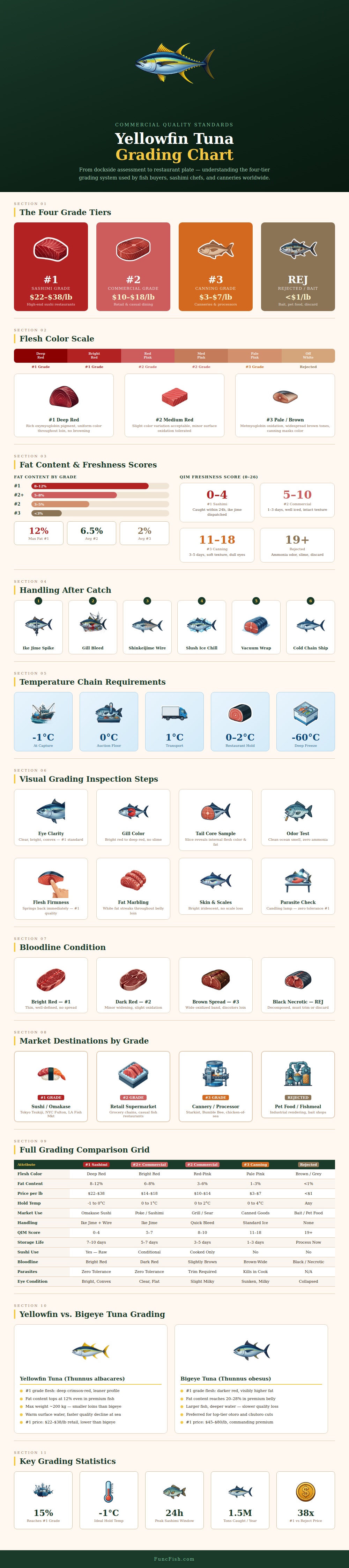
Here’s what we do: The chef puts a slice of yellowfin on your plate at sushi bar. Before it hits your tongue, you’re judging its color, its texture, the promise of flavor. Every day, buyers is doing the same thing in fish markets around the world, where a strict grading system backs up instinct. It’s a four-tier chart that determines if a fish will be processed as canned tuna or become premium sashimi. Get to know the pecking order and it’ll change the way you view seafood from your own plate.
When you are at a sushi bar, grade 1 is usually referred to as Grade 1. It’s also the best. Firm flesh that bounces back when pressed against a palm, a nice deep red color, and a great amount of fat running through it. But why does color matter? The color tells us how much oxymyoglobin there is in the meat. And having lots of oxymyoglobin mean the fish was treated very well immediately after being caught.
How Tuna Is Graded
To be considered grade 1 the tuna had to of been ikejimed. That’s a special technique where a spike is driven into the brain of the fish to prevent stress hormones from entering the muscles. When stress hormones enter the muscle, they sour the meat and cause it to turn brown in hours. It is a tiny little technical step on boat deck that makes all the difference for the customer.
One step down from Commercial Grade 1 you have commercial grade 2 (still great but just missed the window of immediate ice chilling), followed by a little bit of oxidation around the edges and maybe a slightly pinker, brighter red flesh. Safe to eat and perfectly good after being seared or grilled, this is the fish that finds its way into casual restaurants and grocery stores. That’s the workhorse of tuna. If it continues to degrade, it becomes what’s called grade 3 and appears pale or even browner. Too soft to slice for presentation on a raw platter, it’s great for canning, however. Cooking hides color and firmness issues. This allows lower-grade fish to become shelf-stable products which we all depend on.
It is much more than a book reading. Even though the grading system is so specific, it’s actualy quite manual. The first thing checked are the eyes; fresh eyes are clear and bright, while older fish have cloudy, sunken eyes. Next up are the gills: bright red and not slimy is good, while dry and brown are bad. The tail has fat content & internal color info in a core sample, no need to cut into the precious belly! Lastly, you need to touch the meat a lot. You can get a feel for it after some practice; otherwise, light reflecting off the meat will help teach you the basics. Understanding what you’re seeing doesn’t come overnight.
And all along this chain there’s one silent guardian of quality: temperature. From the minute it’s bled to the time it hits the kitchen the fish should remain as close to freezing as possible. A few degrees of variation in transportation mean bacteria will start growing and spoiling faster. Keep in mind that when restaurants is storing their tuna right, they’re keeping that fine line between freshness and fat.
Next time you get some tuna at a market, smell it. Don’t believe the label, just go by your nose. Fresh fish doesn’t smell fishy or ammonia-like, it smells like clean ocean water. If it do, walk away.
To illustrate the importance of grade, consider comparing yellowfin to its cousin bigeye tuna. While bigeye has more fat and can retain quality longer in deeper waters, it will also have a rich texture even if not perfectly fresh. Conversely, yellowfin is leaner. It degrades quickly if not handled properley. This creates a need for proper chill and dispatch methods when aiming for the highest grades.
Next time you bite into a piece of chutoro or akami, think about all that went into getting your slice of excellence. From the ocean to the table, all that effort translates to one thing: a perfectly tender morsel of deep red perfection. It is the product of careful handling and strict science.